
Recipe
Eggless Pineapple Cake Recipe with Fresh Cream (Bakery Style)
Sep
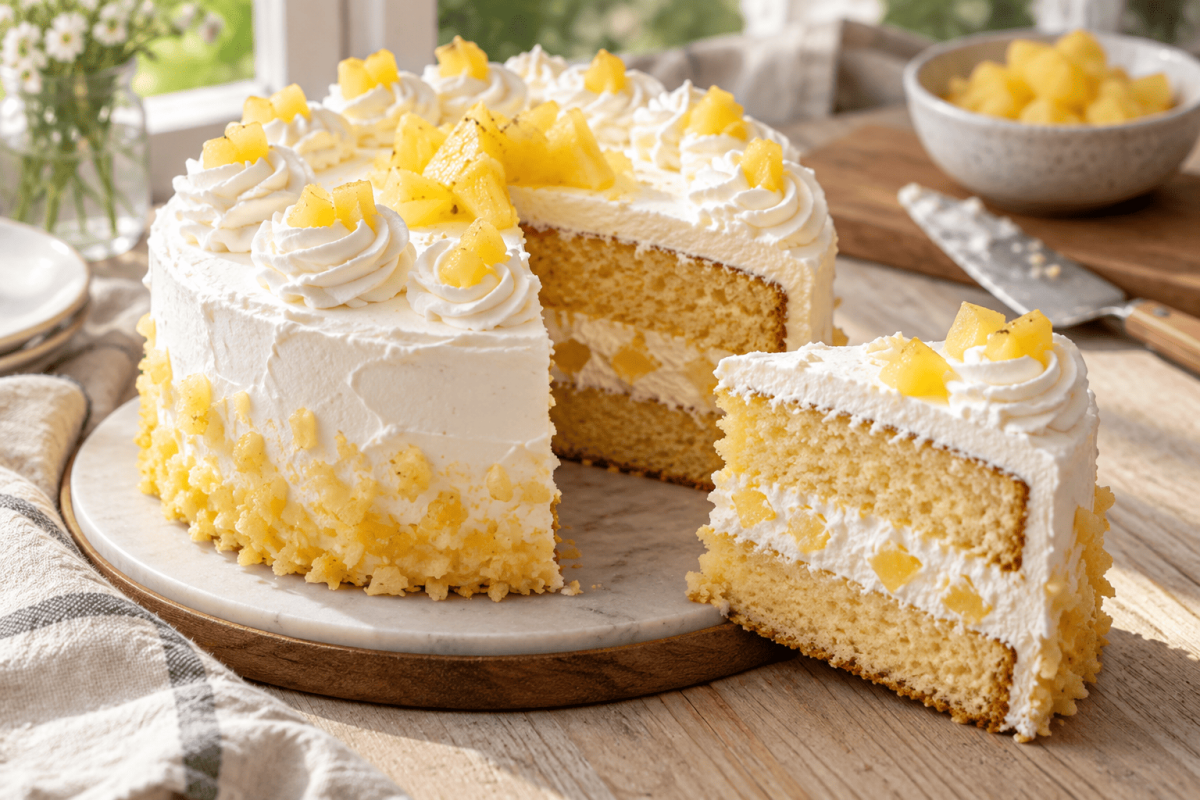
A bakery-style pineapple cake is more than vanilla sponge with fruit on top. The soft layers need a light pineapple soak, small pieces of fruit in the middle and whipped cream that holds its shape when you cut a slice. This eggless pineapple cake recipe brings those parts together in a six-inch celebration cake. You can make it with canned pineapple in juice, or use the fresh-fruit option below when pineapples are in season.
Makes: One 6-inch, two-layer cake (about 8 slices)
Equipment: Two 6-inch round cake tins, electric whisk, sieve and spatula
Oven: 175°C conventional / 160°C fan
Allow: About 30 minutes to prepare, 25–35 minutes to bake, plus cooling and at least 2 hours to chill
What makes this pineapple cake taste like a bakery cake?
The pineapple flavour should reach the sponge, not just the decoration. A little juice brushed onto each baked layer keeps the cake soft, while chopped pineapple gives the filling its bite. Keep the fruit pieces small and well drained: large, wet chunks make the cream slide when the cake is cut. The frosting uses whipping cream, which is different from the lower-fat cream sold for cooking. Check the pack for at least 30% fat if you are using dairy cream.
Ingredients
For the eggless sponge
- 180 g plain flour (maida)
- 130 g caster sugar
- 1½ teaspoons baking powder
- ¼ teaspoon baking soda
- ¼ teaspoon fine salt
- 150 g plain curd (dahi), at room temperature
- 80 ml neutral oil
- 90 ml milk, at room temperature
- 1 teaspoon vanilla extract
For the pineapple filling and soak
- 180–200 g well-drained canned pineapple in juice, finely chopped
- 60 ml juice reserved from the can, for brushing the sponge
For the cream
- 400 ml cold, unsweetened dairy whipping cream (at least 30% fat)
- 35 g icing sugar, sifted
- ½ teaspoon vanilla extract
If your whipping cream is already sweetened: Check its label and omit the icing sugar. Do not substitute ordinary low-fat fresh cream and expect it to whip to the same consistency.
How to make eggless pineapple cake
1. Bake the sponge
Heat the oven to 175°C (160°C fan). Grease two 6-inch round tins and line their bases with baking paper. Sift the flour, baking powder, baking soda and salt into a bowl.
In a second bowl, whisk the sugar, curd, oil, milk and vanilla until evenly combined. Add the dry ingredients and fold gently, stopping as soon as no dry flour remains. Divide the batter equally between the tins. Bake on the centre rack for roughly 25–35 minutes, until the tops spring back lightly and a skewer inserted into the centre comes out clean. Start checking at 25 minutes; ovens and tins vary.
Leave the sponges in their tins for 10 minutes, then turn them onto a rack. Let them cool completely before adding cream. Even a slightly warm sponge can soften the frosting.
2. Prepare the pineapple
Drain the canned fruit, keeping 60 ml of its juice. Cut the pineapple into small pieces and blot away any excess surface liquid. Taste the reserved juice. If it is very sweet, dilute it with a little water before using it as a soak. If the can contains pineapple in heavy syrup, use less syrup on each layer so the cake does not become soggy.
3. Whip the cream
Chill the mixing bowl and beaters. Pour in the cold whipping cream and beat until it begins to thicken. Add the icing sugar and vanilla, then continue beating until the cream forms peaks that hold their shape. Stop as soon as it is firm enough to spread; beating past that point can make dairy cream grainy. Keep it refrigerated while you prepare the cake layers.
4. Fill and finish the cake
Place one sponge on a plate or cake board. Brush it evenly with about half the reserved pineapple juice. Spread a layer of cream over the sponge, keeping a slightly thicker ring of cream around the edge. Scatter the chopped pineapple inside that ring, then cover it with a little more cream so the next sponge sits level.
Set the second sponge on top and brush it with the remaining juice. Spread the rest of the cream over the top and sides. A smooth coat is enough; you can also make simple swirls with the back of a spoon. Decorate with a few well-drained pineapple pieces just before serving. Cover and refrigerate the finished cake for at least 2 hours so it is easier to slice.
Can I make pineapple cake with fresh pineapple?
Yes. For the filling, use about 220 g finely diced ripe pineapple. Simmer it with 1 tablespoon sugar over medium-low heat for 8–12 minutes, stirring occasionally, until some of the liquid has evaporated and the pieces have softened. Cool it completely, then drain off any loose liquid before placing it between the cake layers. If you have no pineapple juice for soaking, dissolve 25 g sugar in 40 ml hot water, cool it, and brush the sponge lightly with that syrup. The fresh fruit will make the filling a little more tart than canned pineapple; taste it before adding the sugar.
Small fixes that make a big difference
The cream will not hold peaks. Check that it is whipping cream with at least 30% fat, and chill both the cream and bowl. Low-fat cooking cream may remain runny regardless of how long you beat it.
The layers slide when cut. Drain the pineapple thoroughly and avoid piling all the fruit in the centre. Give the assembled cake time to chill before slicing.
The sponge tastes dry. Brush the juice across the whole surface, including the edges. Add it gradually; the cake should feel moist, not saturated.
The cake feels too sweet. Choose pineapple packed in juice rather than heavy syrup. Taste the fruit and the whipping cream before adding more sugar. An unsweetened dairy cream lets you control the sweetness yourself.
Serving and storage
Use a sharp knife wiped clean between cuts for neat slices. Keep this fresh-cream cake covered in the refrigerator and serve it chilled. For the best texture, make it the day you plan to serve it or the day before; eat refrigerated leftovers within 2 days. Return it to the refrigerator promptly after serving, especially in warm weather.
Frequently asked questions
Is pineapple cake the same as pineapple upside-down cake?
No. This version is a chilled layer cake with whipped cream and pineapple between the sponges. An upside-down cake bakes fruit at the bottom of the tin and is turned out after baking. They need different methods, so this recipe should not be used as an upside-down cake batter without further adjustment.
Can I make pineapple pastries from this recipe?
Yes. Chill the completed cake until firm, then cut it into smaller rectangular portions if you have baked the sponge in a suitable rectangular tin. Baking time will change with the tin size and batter depth; check doneness with a skewer rather than relying on the round-tin timing above.
Can I assemble the cake before a birthday party?
Assemble it the day before and keep it covered in the refrigerator. Add any exposed fresh pineapple decoration shortly before serving so the top stays tidy. Allow enough time for the sponge to cool completely before you begin frosting.
