
Food & Cooking
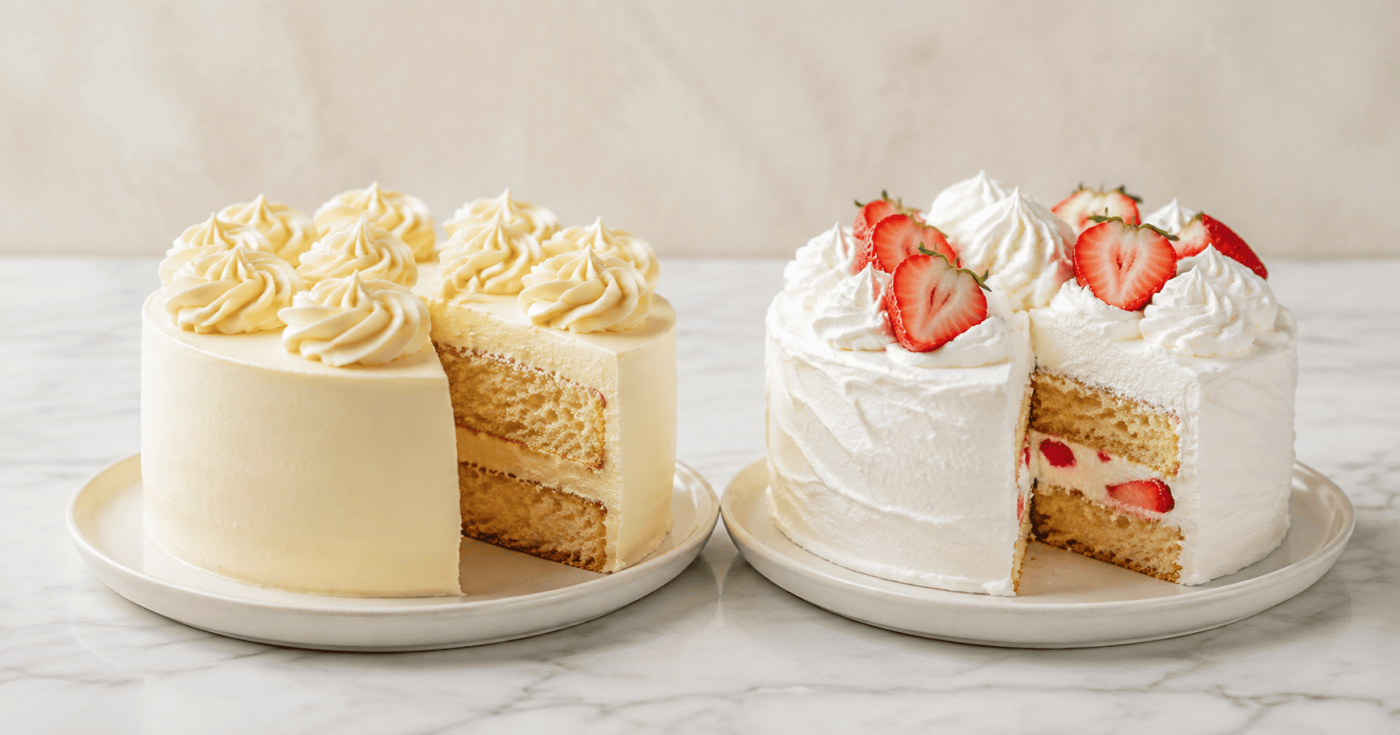
Buttercream vs Whipped Cream Frosting – Difference Explained
Sep
When selecting cake frosting you should take into account its influence on such characteristics of the finished product as the sweetness of the cake, the texture and appearance, the way of storing, decoration and transportation. Choosing a frosting that is unsuitable for your cake might result in negative consequences.
Therefore, the choice between buttercream frosting and whipped cream frosting cannot be reduced to the simple explanation that the first is heavier and the second is lighter.
Here is the answer: use whipped cream frosting if you prefer soft and light cake with low sweetness that could be kept in the fridge. If your cake should be decorated, have sharp edges and be stable, opt for buttercream.
However, neither of these frostings is completely heat resistant. Thus, the choice should be determined by the recipe, the season, the design of the cake and the way it will be stored.
Buttercream vs Whipped Cream Frosting: Differences at a Glance
| Factor | Buttercream Frosting | Whipped Cream Frosting |
|---|---|---|
| Main Ingredients | Butter or shortening with sugar | Whipping cream with sugar |
| Texture | Dense and creamy | Soft and fluffy |
| Sweetness | More sweeter | Less sweet |
| Stability | Suitable for structural stability and piping | Soft and temperature-sensitive |
| Decoration | Good for complex design | Suitable for simple decoration |
| Sharp edges | Easy to achieve | Hard to preserve |
| Refrigeration | Depends on the recipe and season | Requires refrigeration |
| Transport | Easy to transport | Needs chilled transport |
| Good for | Theme cakes, cupcakes, tiered cakes | Fruit cakes, sponge cakes, light desserts |
| Preparation | From easy to hard depending on the type | Easy but can be overmixed |
| Hot weather | More stable compared to whipped cream but not heat resistant | Quickly softens and loses volume |
| Taste experience | Rich and buttery | Delicate and fresh |
What Is Buttercream Frosting?
Buttercream is the general term for frosting that consists of blending fat (usually butter or shortening) with sugar. Sometimes such components as egg whites, yolks, milk or custard could be used.
Buttercream is valued for its smooth texture and ability to keep its shape. It is widely used in order to create such design elements as borders, flowers, rosettes, writing, sharp edges etc.
Buttercream is described as stable frosting but it requires more precise definition. Its performance is determined by the particular type of buttercream and its ingredients. An all-butter frosting softens in the room with increased temperature, while the frosting that includes shortening or a strong meringue structure could stay firm for some time.
Popular Types of Buttercream
American Buttercream
American buttercream frosting is made by beating together butter or shortening with icing sugar and flavoring agent. This type is considered to be the easiest to prepare and it is good for cupcakes, borders and decorative piping.
The main drawback of American buttercream frosting is its extreme sweetness. Since the major part of its structure is made up by the icing sugar, it is hard to change the sweetness level.
Swiss Meringue Buttercream
This buttercream is prepared by heating egg whites and sugar, whipping them and gradually adding the butter. This type of frosting is characterized by silky texture and less sweetness than American buttercream. It gives elegant finish but it requires higher precision in the control of the temperature of ingredients.
Italian Meringue Buttercream
Italian meringue buttercream is made by pouring hot sugar syrup into whipped egg whites and then adding the butter. It is described as smooth and refined type of frosting and in addition it is more stable than soft buttercreams.
Despite its better performance in the warm weather, the butter in it starts softening when being exposed to excessive heat.
Ermine Buttercream
Also called flour frosting, ermine buttercream is made by blending a cooked mixture of milk, sugar and flour with the butter. It is lighter and less sweet than American buttercream and its texture is between that of the traditional buttercream and the whipped cream.
What Is Whipped Cream Frosting?
Whipped cream frosting is made by whipping cold cream with sugar and flavoring until it becomes light and puffy. Unlike buttercream, its structure is created by tiny bubbles of air trapped in it.
Thus, whipped cream frosting gives soft, melt-in-the-mouth texture and does not conceal the delicate taste of the cake. It is especially suitable for such cakes as fresh fruit cakes, pineapple cake, Black Forest cake and certain types of chocolate cakes.
The disadvantages of whipped cream frosting are its fragility. Warm temperature, overmixing and prolonged stay of the cake without refrigeration cause frosting to soften, deflate or to release moisture.
Regular Whipped Cream and Stabilised Whipped Cream
Regular whipped cream is used when the dessert is planned to be assembled and served immediately. Stabilised whipped cream has one additional ingredient that enables it to preserve its shape longer.
Depending on the recipe, the stabilizing ingredient may include gelatin, mascarpone, cream cheese or appropriate starch. However, the use of stabilizer does not provide the cake with ability to be left in a hot room forever. Whipped cream should be stored in the fridge.
When you order a cream cake, ask your baker whether he uses fresh dairy cream or a non-dairy whipping topping since the latter products may differ in taste, sweetness and ingredients.
Buttercream Frosting vs Whipped Cream Frosting: Differences Explained
1. Taste and Sweetness
Since butter and sugar are the main ingredients of buttercream frosting, it has a richer taste. American buttercream frosting is considered to be very sweet while Swiss and Italian types give more balanced taste.
Whipped cream frosting has a fresh and delicate taste. It contains less sugar than buttercream in most cases and preserves the taste of the sponge, fruit or filling.
If you prefer a rich and indulging finish, go for buttercream. Otherwise, whipped cream would suit you better.
2. Texture and Mouthfeel
Buttercream has smooth, creamy and dense texture. If refrigerated, it becomes more firm since butter in it solidifies. Therefore, buttercream cake becomes more pleasant for eating when it is given time to thaw.
Whipped cream retains soft and airy texture if kept at proper temperature. It feels light in the mouth, but it is unable to hold as much decoration as buttercream.
3. Piping and Cake Decoration
In terms of decorating your cake, buttercream is more suitable choice because it is able to hold the flowers, borders, letters and textured piping and it is also easier to be smoothed around layer cake and to create sharp edges.
Whipped cream frosting is good for creating simple swirls, shells and borders even if stabilized. However, the fine details tend to soften and the sharp edges are hard to preserve.
The question of frosting becomes crucial when you compare designer cakes with traditional cakes. The former types are usually decorated with buttercream due to its better performance.
4. Stability and Transportation
The buttercream is more stable, but the recipe is important. All-butter frosting tends to soften greatly during a long distance or in a warm vehicle.
Whipped cream needs constant cooling. The cake with this kind of frosting should be transported in the air-conditioned vehicle and kept away from direct sunlight and then refrigerated as quickly as possible.
For the long distance transport, the outdoor display or complex structure of the cake buttercream is usually a better choice. But the temperature control is necessary for both.
5. Performance in Hot Weather
Neither of these frostings is heat-resistant.
Whipped cream frosting quickly loses volume and shape when it gets warm. Buttercream can last longer, but the butter starts softening due to increased temperature of surrounding. All-butter frosting melts faster than the one that has shortening.
For the summer celebration it is necessary to:
- Keep the cake refrigerated until shortly before serving.
- Do not place it near the windows, lights or in the direct sunlight.
- Use insulated packaging for transporting the cake.
- Minimize the time it stays on display.
- Consult the venue and travel time with the baker beforehand.
For the outdoor celebration it is sometimes better to cover the cake with ganache or fondant than to use fragile whipped cream or all-butter frosting.
6. Refrigeration and Serving
The whipped cream needs constant refrigeration since it consists of fresh cream and it loses its structure in the room temperature.
But the buttercream could be stored in a different way depending on its ingredients. The simple butter and sugar buttercream is more flexible in this regard than whipped cream, but buttercream with eggs, milk, custard, cream cheese or perishable fillings should be refrigerated.
These recommendations should be followed basing on the complete cake, not just its frosting. Even if the cake is covered with buttercream, it could still require refrigeration if it contains any cream or fruit filling.
7. Color and Finish
Buttercream accepts the color easily and is able to provide any shades from the light to deep decorative ones. It is also easier to decorate with texturing, stenciling and painting.
Whipped cream frosting goes well with light colors. Using excessive liquid colorant weakens the structure of the frosting and creating dark color is rather difficult without affecting the taste and the consistency.
8. Layered and Tiered Cakes
Buttercream is more appropriate for tall cakes, tiered design and layers that need a firm outer coating. It can also act as a protective layer around the soft fillings.
Whipped cream can be used between the layers of the cake successfully but it should be properly supported and kept cool. Heavy layers must never rely on frosting for supporting.
What Cakes Work Better with Buttercream Frosting?
Buttercream frosting suits for such cakes as:
- Theme cakes and character cakes
- Wedding and engagement cakes
- Tall layer cakes
- Cupcakes with decorative piping
- Cakes with sharp edges
- Cakes with floral piping and buttercream artwork
- Cakes with fondant covering
- Decorations with strong or dark colors
This does not mean that buttercream should only be used with heavy cakes. Such cakes as vanilla, chocolate, red velvet, coffee and sponge cakes can be decorated with buttercream if sweetness and filling are properly balanced.
What Cakes Work Better with Whipped Cream Frosting?
Whipped cream works well for:
- Fruit cakes
- Black forest cakes
- Pineapple cakes
- Strawberry shortcakes
- Light chocolate sponge cakes
- Chiffon and genoise cakes
- Simple birthday cakes
- Refrigerated cakes
- Cakes for people who like less sweetness
Whipped cream can also balance rich chocolate cake. The belief that the heavy cakes should be always covered with buttercream is too narrow; the right balance of taste and structure is what matters.
How to Choose the Right Frosting
Use buttercream frosting if:
- You need to create detailed piping and design;
- You want smooth sides or sharp edges;
- Your design involves such elements as flowers, figures, textures;
- You cake should be transported for a long distance;
- You want rich, sweet and buttery taste;
- Your cake should be covered with fondant.
Use whipped cream frosting if:
- You prefer light and less sweet cake;
- Your cake should be kept refrigerated;
- Fresh fruit is an integral part of its flavor;
- Your design of the cake is rather simple;
- Your cake should be consumed shortly after serving;
- Airy texture is more important than sharp design.
If you prefer something between the two options, you can try Swiss meringue buttercream, ermine frosting or properly stabilized whipped cream.
Common Mistakes While Working with Frostings
Common Mistakes While Working with Buttercream
- Using butter that is too warm
- Thinking that every buttercream is heat-resistant
- Adding too much of liquid flavoring or colorants
- Storing the cake in the fridge without protection from odors
- Serving the cake directly from the fridge
- Using soft buttercream under heavy decorations
Common Mistakes While Working with Whipped Cream Frosting
- Whipping the cream and equipment that is too warm
- Continuing beating the cream after forming stiff peaks
- Adding too much liquid colorant
- Leaving the cake without refrigeration
- Expecting the unstabilized cream to keep the detailed design
- Decorating the warm or incompletely cooled cake
If you whip the cream too much it becomes granular and finally separates into butter and liquid. Do not continue beating it if it already achieved desired consistency.
Which One Is Healthier?
Neither frosting is healthier in general since buttercream often has more sugar and whipped cream has plenty of dairy fat. The difference is in the recipe and in the amount of consumption.
Whipped cream is lighter and usually has less added sugar, but it does not mean that every whipped topping has fewer calories or simpler composition. Non-dairy toppings could have different formulation.
Frequently Asked Questions
Which one tastes better: buttercream or whipped cream?
Taste preferences are individual. Buttercream is richer, sweeter and more buttery while whipped cream is lighter and emphasizes the delicate taste of the cake.
Which frosting is better for birthday cakes?
Whipped cream is more suitable for simple refrigerated birthday cakes. Buttercream is better for theme cakes and cakes with detailed decoration.
Can whipped cream hold piped decorations?
Whipped cream can hold basic swirls and borders, but it is less suitable for detailed flowers, sharp edges or decorations that should stay firm for several hours.
Can fondant be applied on whipped cream frosting?
It is not recommended since the whipped cream is soft and contains more moisture, which leads to instability of fondant. Buttercream or ganache is better.
Which frosting is better for summer?
Buttercream is more stable than whipped cream but neither of them should stay in the direct heat. The type of buttercream, indoor temperature, travel time and refrigeration are more important than frosting name alone.
Does buttercream cake need to be refrigerated?
Whether the cake should be refrigerated or not depends on the complete recipe. The buttercream containing perishable ingredients and cakes with cream, custard or fruit filling should be refrigerated. Follow the storage instructions of the baker.
Does stabilized whipped cream need refrigeration?
Yes. Stabilization helps it to keep the shape but does not remove the necessity of refrigeration.
Final Verdict
In the comparison of buttercream vs whipped cream frosting there is no universal winner.
Whipped cream frosting is more suitable for people who value the light texture and lower sweetness. Buttercream is more suitable for those who pay attention to the structure and decorating of the cake.
What is really important is not just what frosting you choose but which type of it and how the finished cake will be stored. Pay attention to the weather, travel time, design and serving of the cake before making your choice.
