
Recipe
Fruit Cake Recipe: A Moist Homemade Cake with Dried Fruit and Orange
Oct
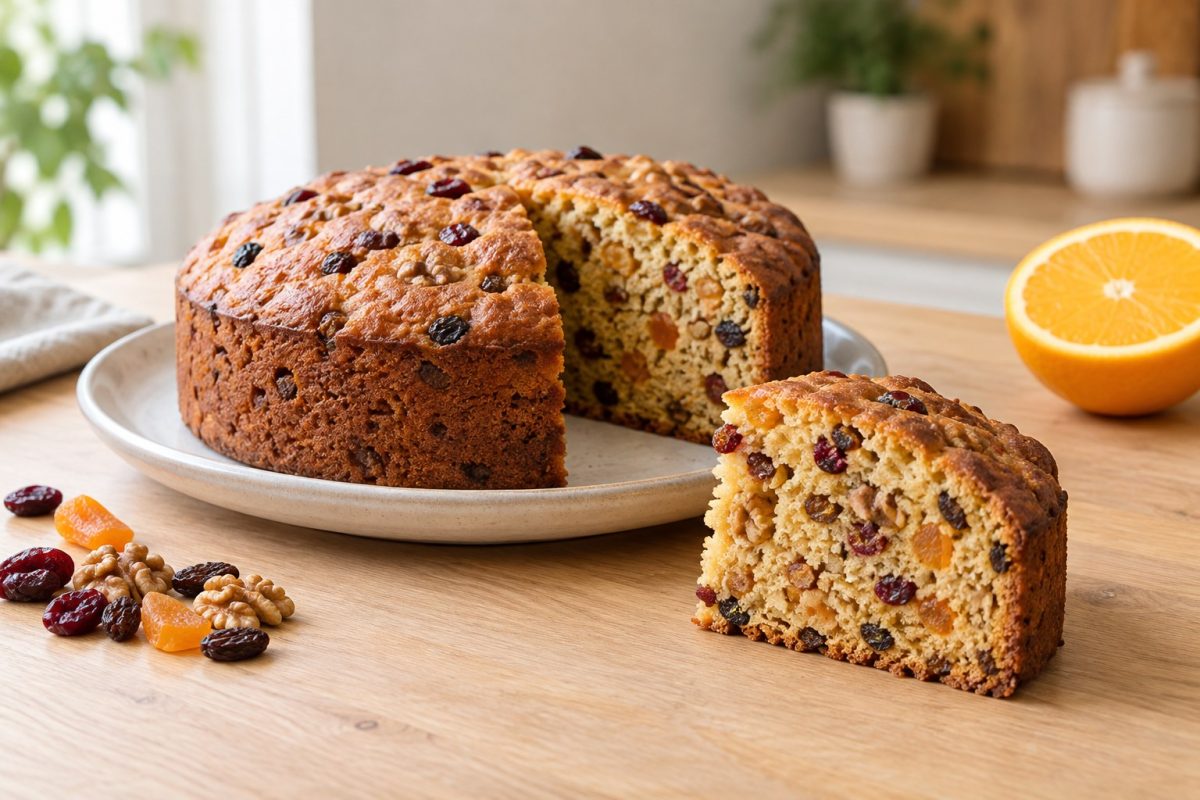
A good fruit cake should have more than a mouthful of raisins.” The crumb should be cohesive, the fruit tender, and the spices should let the butter and citrus shine through.
This fruit cake recipe uses a butter-based batter, a short orange-juice soak and a mix of dried fruit. It’s a cake to cut and share with tea, not a sponge layered with whipped cream and fresh fruit. There’s no alcohol in the ingredients and the fruit doesn’t need to soak overnight.
Be sure to allow time for baking and cooling before you begin. A warm, fruit-filled cake is more difficult to cut into neat slices.
Fruit Cake Recipe at a Glance
| Detail | Guide |
|---|---|
| Cake style | Butter-based dried-fruit cake |
| Yield | One 8-inch round cake; approximately 10–12 slices |
| Tin | 8-inch round tin, at least 2 inches deep |
| Active preparation | Approximately 25 minutes |
| Fruit soaking | 30 minutes, plus draining and cooling |
| Oven temperature | 160°C conventional or 145°C fan |
| Estimated baking time | 55–75 minutes; check the centre before removing |
| Cooling | Allow approximately 2 hours, or until completely cool |
| Equipment | Kitchen scale, mixing bowls, sieve, mixer, spatula, cake tin and wire rack |
Baking time is just a guide. The center may cook at different times, depending on your tin material, oven accuracy and the moisture in the fruit.
Ingredients for Homemade Fruitcake
Weigh the flour, butter and dried fruit on a kitchen scale. In different kitchens, chucking chopped fruit or flour into a cup can mean very different things.
For the Fruit
- 125 g raisins
- 75 g dried cranberries
- 50 g dried apricots, chopped into pieces roughly the size of the raisins
- 150 ml orange juice, for soaking
For the Cake Batter
- 200 g plain flour or maida
- 2 level teaspoons baking powder
- ½ teaspoon ground cinnamon
- ¼ teaspoon fine salt
- 150 g unsalted butter, softened
- 125 g caster sugar
- 3 large eggs, approximately 150 g without their shells, at room temperature
- 1 teaspoon vanilla extract
- Finely grated zest of 1 orange
- 40 g walnuts, chopped, optional
Wash and dry the orange before zesting it. Grate only the coloured outer skin; avoid the white pith beneath it.
Choose Your Fruit and Get Your Ingredients Ready
Try to get a mixture of small, even bits. A big chunk of dried apricot can break up a slice, while smaller chunks are more evenly distributed through the batter.
Total dried fruit should be 250 g. You can substitute raisins for the cranberries or apricots, by weight, but the flavour and sweetness will change. Fresh grapes, chopped apples and other fresh fruit are not substitutes as their moisture content would require a different recipe.
Check if your cranberries are sweetened. That way you have some idea of how sweet the finished cake might be without having to adjust the quantities of batter for your first attempt.
If you wish, you can leave out the walnuts. If using salted butter, leave out the salt. You can also leave out the cinnamon if you want a cake with a stronger orange-and-vanilla flavour.
This recipe includes eggs. If you substitute all three for yoghurt, banana or anything else, it will change the structure, so do not try to guess a substitution, use an eggless recipe developed separately.
How to Make Fruit Cake
1. Soak and drain dried fruit
Put the raisins, cranberries and chopped apricots in a heatproof bowl. Heat the orange juice to hot, but not boiling. Pour over the fruit, stir. Cover and let stand for 30 minutes.
Place the fruit in a sieve and leave to drain for 10 minutes. Spread out on a plate and pat off any excess liquid with kitchen paper. Cool to room temperature.
The fruit should feel soft, but not have juice pooling underneath. Don’t add the leftover soaking juice to the batter, it isn’t part of the measured liquid in the batter.
2. Prepare the Tin and Oven.
Preheat oven to 160°C (fan 145°C). Grease the tin and line the base and sides with greaseproof paper.
Place a rack in the center of the oven. If using an OTG, use the baking mode as suggested by the manufacturer and not the grill setting. Do not place tin near heating elements.
If your cakes always brown before the center is cooked, an oven thermometer helps.
3. Cool Before Slicing
In a bowl, sift together the flour, baking powder, cinnamon and salt. Give it a quick stir to get the baking powder all around.
Have this bowl ready before adding the butter and eggs so you can get the finished batter into the oven quickly.
4. Cool Before Slicing
Beat the softened butter and caster sugar until the mixture looks paler and feels lighter, about 3–4 minutes.
The butter will yield slightly to gentle pressure, but should not appear oily or melted. Scrape the bowl halfway through the beating to incorporate any butter that might not have mixed in.
5. Slowly Beat In the Eggs
In a separate bowl beat the eggs lightly. Add them in several additions to the butter mixture, beating after each addition.
If the mix starts to separate, add in a tablespoon of flour from your measured dry ingredients. Add the vanilla and orange-zest.
6. Add the Flour and Fruit
Using a spatula, fold the dry ingredients into the butter mixture. When only a few faint streaks of flour remain, stop and stir in drained fruit and optional walnuts.
Fold until fruit is evenly distributed and no dry flour remains. Scrape the bottom of the bowl as flour can collect there.
Don’t expect a runny batter that pours easily, expect a thick batter that you can scoop up. Don’t add any extra juice to make it pour easier.
7. Fill the Tin and Bake
Spoon the batter into the prepared tin and level the surface. Put in the heated oven and bake for about 55-75 minutes.
Begin checking at 55 minutes. If the top is brown but the center is undercooked, loosely cover the tin with foil and continue to bake. Do not let foil touch any exposed heating element.
8. Look at the Center Closely
Put a skewer through the middle. It should come out clean, without wet batter, but a few moist crumbs are okay.
When you hit fruit, try again somewhere else nearby. When you move the tin gently the surface should feel set and the center should not wobble.
If there is still wet batter, continue to bake, checking every 5-10 minutes. Just because the top is brown doesn’t mean the middle is done.
9. Chill Before Cutting
Leave the cake in the tin for 20 minutes, then carefully turn out onto a wire rack. Take the parchment paper out and allow the cake to cool completely.
Wrap it only after it has cooled, for serving the next day. Do not allow steam to be trapped in wrapping while cake is hot.
How to Get Moisture Without a Gummy Center
A moist fruit cake is one thing, an underbaked cake is another. When you cut the crumb, it should hold its shape and not leave a paste-like layer on the knife.
Control the moisture at the fruit-preparation stage: soften the fruit well, drain it thoroughly, and keep the leftover juice out of the batter. Then set the cake in the oven long enough to set through the middle.
Do not try to change several things at once. Extra fruit, less flour and added juice may each sound innocent enough, but together they can dramatically change the batter.
For your first bake, use the quantities and tin size as written.
Fruit Cake Troubleshooting
| Problem | Possible cause | What to change next time |
|---|---|---|
| Wet or gummy middle | Underbaking, poorly drained fruit or extra liquid | Drain carefully, omit leftover juice and check more than one spot near the centre |
| Dry edges | Baking too long or an oven running hot | Check oven temperature and begin testing at the earlier end of the time range |
| Dark top with an uncooked centre | Strong top heat or unsuitable rack position | Use the correct baking mode and loosely shield the top once browned |
| Cake breaks during slicing | Slicing while warm, large fruit pieces or insufficient structure from baking | Cool completely, chop fruit evenly and confirm the centre is cooked |
| Fruit gathers near the bottom | Batter made too loose or very large fruit pieces | Keep the batter quantities unchanged and use evenly chopped fruit |
| Heavy, tight crumb | Overmixing after adding flour or poor aeration of butter and sugar | Cream the butter properly and fold gently once flour is added |
Serving, cutting and storage
Don’t stab directly down, use a sharp serrated knife and a gentle sawing motion. If the fruit is sticking to the blade wipe it clean between slices.
Serve the cake plain with tea or coffee. You don’t need to cover it in syrup or thick icing to make it shareable.
Cool cake completely. Wrap and store in an airtight container. Rather than storing in the cupboard, refrigerate in a warm or humid kitchen. Wrap tightly to prevent drying. Serve at room temperature, letting warm slightly if removed from refrigerator.
For longer storage, freeze wrapped portions in a freezer-safe container and thaw covered. Discard cake that is moldy or smells funny. Do not cut away the mold and serve the remainder.
Prefer a fresh-fruit celebration cake instead of a dried-fruit bake? Browse our fruit cakes for ready-made options.
The details that deserve attention are simple: evenly chopped fruit, careful draining, an accurately measured batter and a fully baked centre. Give the cake time to cool, then slice it gently so the fruit and crumb stay together.
